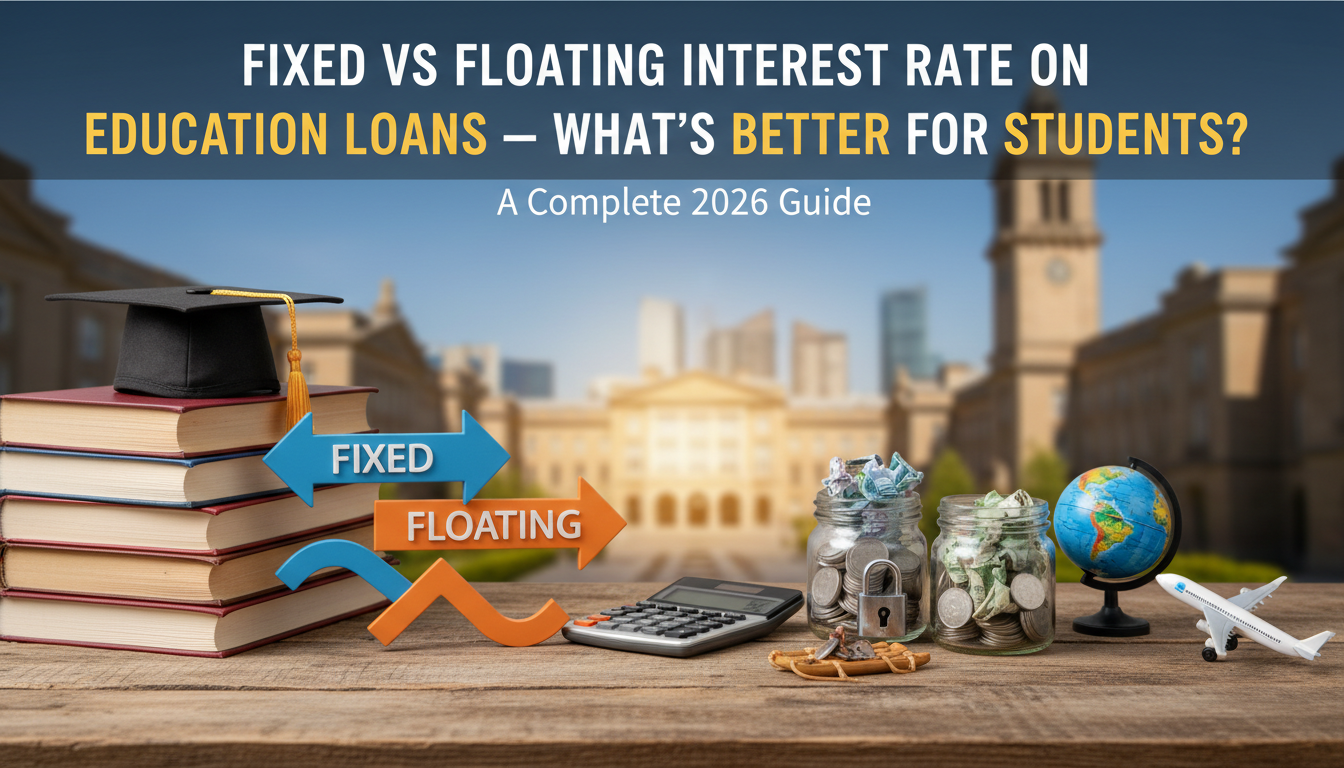
Fixed vs Floating Interest Rate on Education Loans — What's Better for Students?
Choosing the right education loan can be a daunting task for many students and their parents. Among the myriad of decisions, deciding between a fixed or floating interest rate is crucial. Are you caught in the dilemma of which one to choose? You're not alone. Many of us find ourselves in this predicament, especially when dealing with the intricacies of education loans.
Understanding the difference between fixed and floating interest rates can empower you to make an informed decision that best suits your financial situation. This guide will delve into the definitions, advantages, and limitations of each type of interest rate, while also providing practical examples and a step-by-step process to help you decide. Whether you're planning to study in India or abroad, we've got you covered.
Fixed Interest Rate
A fixed interest rate remains constant throughout the tenure of your loan. It means that the interest rate agreed upon at the start of the loan does not change, regardless of market fluctuations.
1) Public Sector Banks
Public sector banks in India, such as the State Bank of India (SBI), offer education loans with fixed interest rates. The rates generally start from around 9% and can go up depending on the borrower's profile and the course of study. These banks are known for their transparency and government-backed security, which can be comforting for many borrowers.
Typical advantages:
Limitations:
2) Private Banks
Private banks like HDFC Bank and ICICI Bank also offer fixed interest rate loans. These banks might offer competitive rates and quicker processing times, but the rates are typically slightly higher than those offered by public sector banks.
Typical advantages:
Limitations:
Key takeaway:
Fixed interest rates are ideal if you prefer stability and predictability in your monthly payments and are concerned about potential market rate increases.
Floating Interest Rate
A floating interest rate, on the other hand, can vary over the course of your loan tenure. It is linked to market conditions and can change based on economic factors.
1) Public Sector Banks
Banks like Punjab National Bank (PNB) offer floating rate loans that are linked to the Marginal Cost of Funds based Lending Rate (MCLR). These rates usually start lower, around 8-9%, but can increase with market fluctuations.
Typical advantages:
Limitations:
2) Private Banks
Private players such as Axis Bank provide floating rate loans, often with rates that are competitive with public sector banks. These banks might offer additional perks like faster processing and better customer service.
Typical advantages:
Limitations:
Key takeaway:
Floating interest rates can be advantageous if you are willing to take the risk of fluctuating payments for the chance of saving money if interest rates fall.
Comparison Table
Here's a quick comparison to illustrate the differences:
| Feature | Fixed Interest Rate | Floating Interest Rate |
|---|---|---|
| Initial Interest Rate | Typically higher | Typically lower |
| Monthly Payments | Stable | Variable |
| Benefit from Rate Drop | No | Yes |
| Risk of Rate Increase | No | Yes |
| Predictability | High | Low |
Step-by-Step Process
Step 1: Calculate Your Requirement
Determine how much funding you will need for your education. Include tuition, living expenses, and any other costs.
Step 2: Research Different Lenders
Look into both public and private banks to compare interest rates, terms, and benefits.
Step 3: Consider Your Financial Situation
Evaluate your current financial standing and future earning potential. Are you prepared for potential rate increases?
Step 4: Decide on Rate Type
Choose between fixed and floating rates based on your risk tolerance and financial goals.
Step 5: Apply for the Loan
Once you've made your choice, gather the necessary documentation and apply for the loan with your chosen bank.
Step 6: Review Terms Carefully
Before signing, review the loan agreement to ensure you understand all terms and conditions.
Step 7: Keep Track of Payments
After disbursement, monitor your loan account and keep up with payments to avoid penalties.
People Also Ask
What is the difference between fixed and floating rates?
Fixed rates remain unchanged throughout the loan tenure, providing stability. Floating rates can vary, reflecting market conditions, and may result in fluctuating monthly payments.
Which is cheaper: fixed or floating rates?
Floating rates are often initially cheaper, but their variability can lead to higher payments if market rates rise. Fixed rates are stable but might start higher.
Can you switch from fixed to floating rates?
Some lenders allow you to switch from a fixed to a floating rate or vice versa, often for a fee. Check with your lender for specific policies.
Real-Life Example
Meet Rohan, an aspiring engineer from Pune. He needed a ₹15 lakh loan to study in the USA. After evaluating his options, Rohan chose a floating rate loan from Axis Bank with an initial rate of 8.5%. The lower initial rate helped him manage his budget more effectively. Over time, the interest rates fell slightly, saving him money on his monthly EMIs. Rohan's decision to opt for a floating rate paid off, as his calculated risk aligned with favorable market conditions.
Common Mistakes
Frequently Asked Questions
1) Can I switch my loan from one bank to another?
Yes, you can refinance or transfer your loan to another bank if they offer better terms, but consider any transfer fees involved.
2) Is prepayment allowed on education loans?
Most banks allow prepayment, though some may charge a fee. Check your loan agreement for specifics.
3) How does the RBI affect floating rates?
The Reserve Bank of India (RBI) influences floating rates through its monetary policy and interest rate decisions, impacting how banks adjust their loan rates.
4) Are there tax benefits on education loan interest?
Yes, under Section 80E of the Income Tax Act, you can claim a deduction on the interest paid for up to 8 years.
Navigating the world of education loans can be complex, but making an informed decision about fixed vs floating rates is a crucial step. FundMyCampus, founded by IIM Bangalore alumni, offers expert guidance and a comprehensive comparison of education loan options. With interest rates starting from 6.75% (subject to T&C), we help you find the best-fit rate for your education needs, whether you're studying in India or abroad. Visit FundMyCampus to get a free rate comparison and take a confident step towards your educational journey.
About FundMyCampus
FundMyCampus is an IIM Bangalore alum–founded education loan platform that helps students get an education loan at the lowest interest rate by comparing offers from 15+ banks and NBFCs for courses in India and abroad. We provide end-to-end education loan assistance — eligibility check, document support, loan application, sanction, and disbursement — so you avoid delays, confusion, and hidden charges. Our process is transparent and student-first, focused on helping you save money, time, and stress. Whether you need a study abroad education loan or a loan for programs like MBA, MS, MBBS, FundMyCampus helps you choose the best education loan based on your profile and university.

Need Help With Your Education Loan?
Get expert guidance on loans, scholarships & financial planning — free.