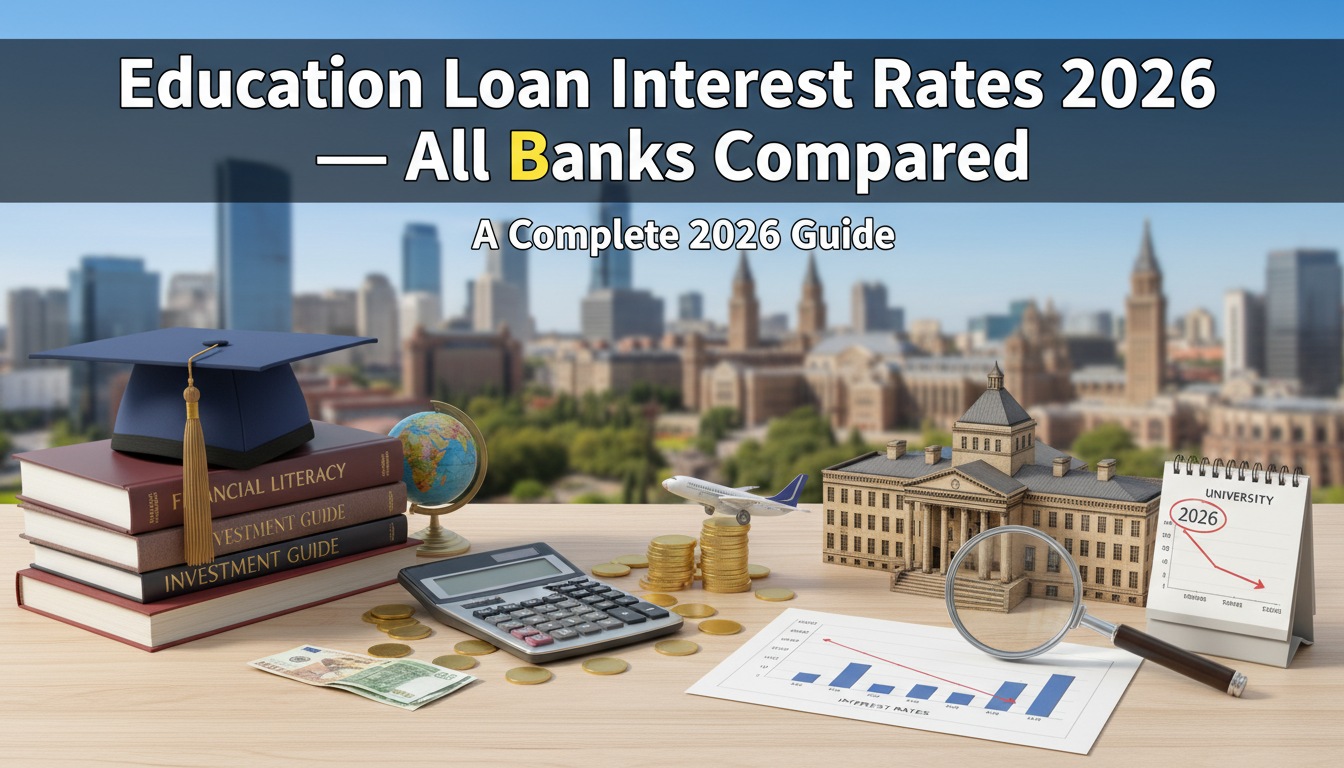
Education Loan Interest Rates 2026 — All Banks Compared
Have you ever found yourself puzzled over the varying education loan interest rates? You're not alone. With numerous banks competing to offer the best financial assistance for students, deciphering the right choice can be daunting. In 2026, the landscape of education loans in India has evolved with new rates and terms, making it essential to stay updated.
Navigating through the intricacies of interest rates, eligibility criteria, and repayment options can feel overwhelming. This guide will help demystify the process by comparing education loan interest rates across major banks in India. We'll break down everything you need to know, from public and private sector banks to specialized education loan providers. By understanding these differences, you can make an informed decision that best suits your educational and financial needs.
Understanding Education Loan Interest Rates
Education loan interest rates are the percentages charged on the amount borrowed, impacting your monthly payments and overall loan cost. In India, these rates can vary significantly based on the type of bank, the student's profile, and the course of study. Government regulations and market conditions also play a crucial role.
1) Public Sector Banks
Public sector banks, like the State Bank of India (SBI) and Punjab National Bank (PNB), often provide education loans at competitive rates. As of 2026, SBI's interest rates typically range from 8.5% to 9.8%, depending on the course and loan amount. PNB offers similar rates, generally hovering between 8.4% and 9.6%.
2) Private Banks
Private sector banks, such as ICICI Bank and HDFC Bank, usually offer loans with slightly higher interest rates than public banks. For 2026, ICICI Bank's rates are between 9.5% and 11%, while HDFC Bank offers rates from 9.7% to 11.2%.
3) NBFCs and Specialized Lenders
Non-Banking Financial Companies (NBFCs) and specialized lenders like Avanse and Credila focus exclusively on education loans. Their rates for 2026 range from 10% to 13%, depending on the student's academic profile and the chosen course. These lenders often cater to students aiming to study abroad.
Comparative Data Table
Here's a quick comparison of education loan interest rates across different types of banks for 2026:
| Bank Type | Interest Rate Range |
|---|---|
| Public Sector Banks | 8.4% - 9.8% |
| Private Banks | 9.5% - 11.2% |
| NBFCs | 10% - 13% |
Step-By-Step Process for Securing an Education Loan
Step 1: Calculate Your Requirement
Begin by assessing how much funding you need. Include tuition, living expenses, travel, and any other costs. This helps in determining the loan amount you should apply for.
Step 2: Research Different Lenders
Explore various lenders to compare interest rates, fees, and repayment options. Consider both public and private banks, as well as NBFCs, to find the best fit for your needs.
Step 3: Check Eligibility Criteria
Ensure that you meet the eligibility criteria of the lenders you are interested in. This typically includes academic performance, course eligibility, and sometimes a co-signer's financial status.
Step 4: Gather Necessary Documents
Prepare all required documents, such as identification, admission letters, and financial statements. Having these ready can speed up the application process.
Step 5: Submit Your Application
Submit your loan application along with the required documents to the selected lender. Ensure all information is accurate to avoid delays.
Step 6: Await Approval
After submission, the bank will assess your application. This may involve a credit check and verification of documents. Approval timelines vary by lender.
Step 7: Review and Sign the Agreement
Once approved, review the loan agreement carefully. Pay attention to the interest rate, repayment terms, and any hidden charges before signing.
People Also Ask
What factors affect education loan interest rates?
Several factors can influence education loan interest rates, including the type of lender, the student's academic performance, the course of study, and the loan amount. Economic factors and government regulations may also impact rates.
Can education loans be used for studying abroad?
Yes, many banks and NBFCs offer education loans for students planning to study abroad. These loans cover tuition, living expenses, travel, and sometimes insurance costs.
How does the repayment process work for education loans?
Repayment typically begins after a grace period post-graduation. The tenure can range from 5 to 15 years, with options for EMI or flexible repayment plans based on the lender's policies.
Real-Life Example
Consider Ananya, an aspiring MBA student aiming to study in the USA. She needed a loan of INR 30 lakh. After researching, she found that public sector banks offered rates around 9%, but the processing time was lengthy. Private banks offered quicker approvals but at around 10.5%. Ananya decided on a specialized lender offering a rate of 11% with flexible repayment options, which suited her future financial plans. She secured the loan, completed her MBA, and began repaying as per the agreed terms.
Common Mistakes
Frequently Asked Questions
1) What is the typical tenure for education loans?
Education loan tenures usually range from 5 to 15 years. The exact term depends on the lender and the borrower's repayment capacity.
2) Are there tax benefits on education loan interest?
Yes, under Section 80E of the Income Tax Act, borrowers can claim a deduction on the interest paid on education loans.
3) Can I prepay my education loan?
Most lenders allow prepayment of education loans, though some may charge a prepayment penalty. It's advisable to check the terms before proceeding.
4) What should I do if I can't repay my loan on time?
If you're struggling with repayments, contact your lender as soon as possible. They may offer options such as restructuring the loan or granting a temporary deferment.
Navigating the world of education loans can be complex, but with the right guidance, you can find the best option for your needs. FundMyCampus, founded by IIM Bangalore alumni, offers a platform to compare education loan options starting from 6.75% (subject to T&C). Whether you're planning to study in India or abroad, we can help identify the most suitable lender and structure for your education loan. Visit FundMyCampus to get a free rate comparison and take the first step toward funding your educational journey.
About FundMyCampus
FundMyCampus is an IIM Bangalore alum–founded education loan platform that helps students get an education loan at the lowest interest rate by comparing offers from 15+ banks and NBFCs for courses in India and abroad. We provide end-to-end education loan assistance — eligibility check, document support, loan application, sanction, and disbursement — so you avoid delays, confusion, and hidden charges. Our process is transparent and student-first, focused on helping you save money, time, and stress. Whether you need a study abroad education loan or a loan for programs like MBA, MS, MBBS, FundMyCampus helps you choose the best education loan based on your profile and university.

Need Help With Your Education Loan?
Get expert guidance on loans, scholarships & financial planning — free.