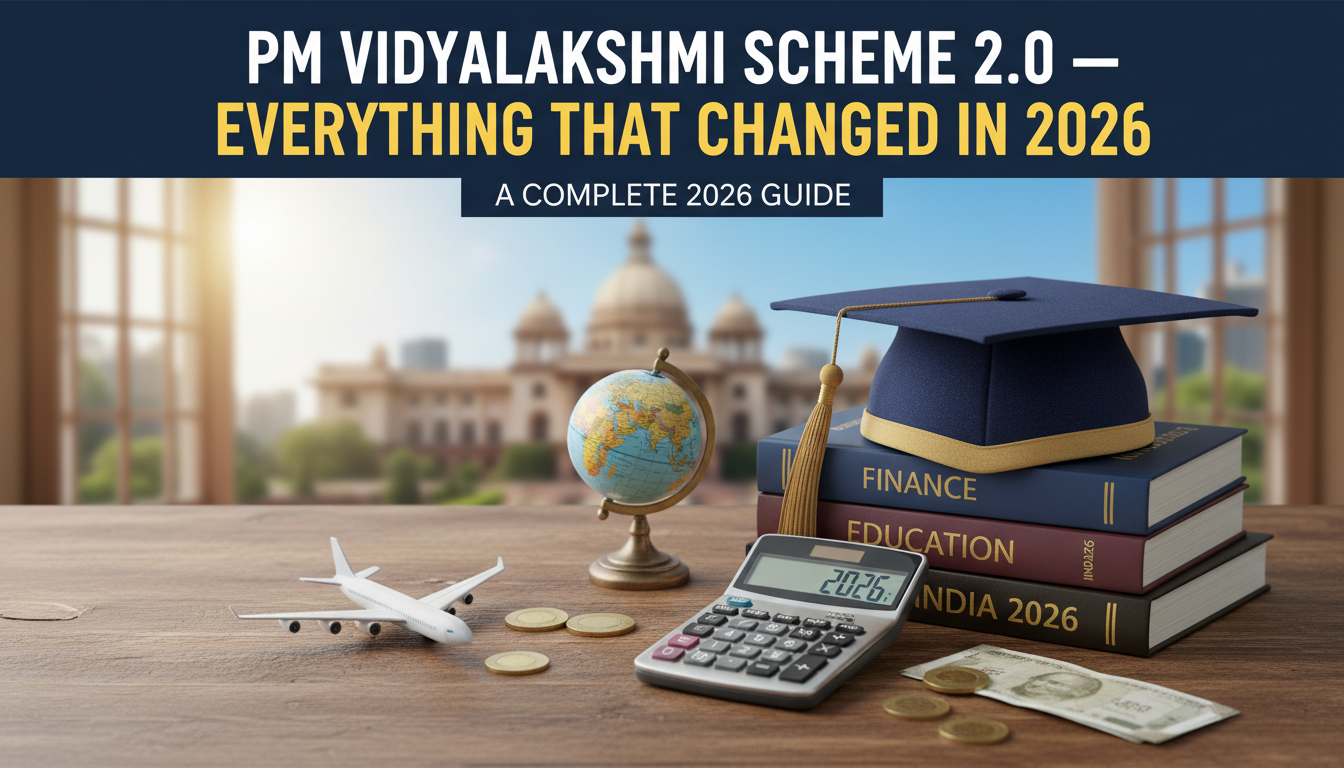
PM Vidyalakshmi Scheme 2.0 — Everything That Changed in 2026
Have you ever found yourself tangled in the web of education loans, unsure of which option to choose for funding your studies? You're not alone. Many students and parents are navigating this complex landscape, especially with the recent updates to the PM Vidyalakshmi Scheme. With the scheme's 2026 overhaul, understanding the changes can be daunting, but it's essential for making informed financial decisions.
The PM Vidyalakshmi Scheme 2.0 has introduced several key changes aimed at streamlining the process and making education loans more accessible to students across India. This guide will walk you through the significant updates, eligibility criteria, and how these changes impact you. Whether you're planning to study in India or abroad, we'll explore the benefits, limitations, and practical steps to take advantage of this scheme.
Key Changes in PM Vidyalakshmi Scheme 2.0
1) Expanded Eligibility Criteria
The 2026 updates have widened the eligibility criteria to include more students, particularly those from economically weaker sections (EWS) and rural backgrounds. Previously, the scheme was more restrictive, often excluding students without collateral or co-applicants with strong financial backgrounds. Now, students with a minimum annual family income under INR 4.5 lakh can apply without collateral for loans up to INR 7.5 lakh.
Typical advantages:
Limitations:
2) Interest Rate Adjustments
Interest rates under the Vidyalakshmi Scheme 2.0 have been adjusted to make them more competitive. As of 2026, rates start at 6.75% (subject to T&C) and vary depending on the lender and the applicant's profile. This change aims to reduce the financial burden on students and make repayment more manageable.
| Lender Type | Interest Rate Range |
|---|---|
| Public Sector Banks | 6.75% - 8.5% |
| Private Sector Banks | 7.0% - 9.5% |
Typical advantages:
Limitations:
3) Simplified Application Process
The application process has become more streamlined, with a focus on digital platforms. Students can now apply online through a unified portal, reducing paperwork and processing time significantly. The portal also provides a single-window facility for applying to multiple banks.
Typical advantages:
Limitations:
4) Enhanced Loan Monitoring
With Vidyalakshmi Scheme 2.0, there's an emphasis on transparency and accountability. The government has introduced enhanced monitoring mechanisms to ensure that funds are disbursed and utilized appropriately. This includes regular updates to applicants and lenders on the status of their applications.
Typical advantages:
Limitations:
Step-by-Step Process to Apply for Vidyalakshmi Scheme 2.0
Step 1: Assess Your Financial Needs
Begin by calculating the total cost of your education, including tuition, accommodation, and other expenses. This will help you determine the loan amount you need to apply for.
Step 2: Check Eligibility
Review the updated eligibility criteria to ensure you qualify. Consider your family's annual income, academic records, and any collateral requirements for higher loan amounts.
Step 3: Research Lenders
Use the Vidyalakshmi portal to compare different lenders. Look at interest rates, processing fees, and any special offers that may apply to your profile.
Step 4: Gather Documentation
Prepare all necessary documents, such as income proofs, academic records, and identification. Having these ready will speed up the application process.
Step 5: Submit Application Online
Apply through the Vidyalakshmi portal. You can apply to multiple banks simultaneously, which can increase your chances of securing a favorable loan offer.
Step 6: Follow Up
Track your application status through the portal. Regularly check for updates and respond promptly to any additional information requests from lenders.
Step 7: Review and Accept Offer
Once you receive loan offers, review the terms and conditions carefully. Accept the offer that best suits your financial needs and repayment capacity.
People Also Ask
How does Vidyalakshmi Scheme 2.0 differ for studying abroad?
The scheme now supports higher loan amounts for students aiming to study abroad, with a focus on courses in technical, professional, and STEM fields. The eligibility and interest rates remain competitive, but additional documentation for international studies may be required.
What if I don't have collateral for a large loan?
For loans up to INR 7.5 lakh, collateral is not mandatory under the new scheme, especially for students from EWS backgrounds. However, for larger amounts, collateral might still be required depending on the lender's policies.
Can I apply for the Vidyalakshmi Scheme 2.0 if I already have an existing loan?
Yes, but it depends on your repayment history and financial capacity. Lenders will assess your existing debt obligations before approving additional loans.
Real-Life Example
Meet Priya, a determined student from a small town in Kerala, who aspired to pursue her MBA in the UK. Her family's annual income was INR 3 lakh, placing her in the EWS category. Under the Vidyalakshmi Scheme 2.0, she applied for a loan of INR 15 lakh through the portal. Without collateral, she secured INR 7.5 lakh from a public sector bank at an interest rate of 7.5%, and with her parent's property as collateral, she obtained the remaining amount from a private bank at 8%.
The streamlined application process and competitive interest rates allowed Priya to finance her education abroad with less financial strain. She is now on her way to achieving her academic goals, supported by the scheme's updated provisions.
Common Mistakes
Frequently Asked Questions
1) What is the maximum loan amount under Vidyalakshmi Scheme 2.0?
The maximum loan amount varies by lender and applicant profile, but typically, loans up to INR 7.5 lakh do not require collateral. For higher amounts, collateral may be required.
2) How long is the repayment period for these loans?
Repayment periods generally range from 5 to 15 years, depending on the lender and loan amount. Some banks offer a moratorium period until the course is completed.
3) Are there any tax benefits on education loans under this scheme?
Yes, under Section 80E of the Income Tax Act, the interest paid on education loans may be eligible for tax deductions, subject to conditions.
4) What documents are needed for the application?
Typically, you'll need identity proof, income proof, admission proof, academic records, and any collateral documents if applicable.
5) Can I switch lenders after the loan is approved?
Switching lenders is possible but not common, as it can be complex and may involve additional costs. Always consult with your current lender before making such decisions.
Navigating the education loan maze can be challenging, but with schemes like Vidyalakshmi 2.0, you have more tools at your disposal. For personalized assistance, FundMyCampus, founded by IIM Bangalore alumni, offers expert guidance in comparing lender offers. With education loans starting from 6.75% (subject to T&C), we can help you find the best rates for both domestic and international studies, across various courses like MBA, MS, and MBBS. Visit FundMyCampus to get a free rate comparison and take the next step towards financing your education dreams.
About FundMyCampus
FundMyCampus is an IIM Bangalore alum–founded education loan platform that helps students get an education loan at the lowest interest rate by comparing offers from 15+ banks and NBFCs for courses in India and abroad. We provide end-to-end education loan assistance — eligibility check, document support, loan application, sanction, and disbursement — so you avoid delays, confusion, and hidden charges. Our process is transparent and student-first, focused on helping you save money, time, and stress. Whether you need a study abroad education loan or a loan for programs like MBA, MS, MBBS, FundMyCampus helps you choose the best education loan based on your profile and university.

Need Help With Your Education Loan?
Get expert guidance on loans, scholarships & financial planning — free.